News Zoroastrian x Oshwal
5 Aug 2026
News Story
I recently had the opportunity to attend a collaborative event presented by the Oshwal Association of the UK (Oshwal) and Zoroastrian Trust Funds of Europe (ZTFE). Both these organisations have been working with Harrow Giving on the Stories of Harrow project to commemorate their heritage and culture that is now deep rooted in Harrow. Stories of Harrow is a project run by Harrow Giving in collaboration with Headstone Manor and Museum and 16 incredible local organisations to explore the social history of Harrow. It is made possible thanks to The National Lottery Heritage Fund. Throughout the development of the Stories of Harrow project the two organisations have found similarities between their cultures - such as the language of Gujarati - which inspired this joint event to come to fruition.
The evening began with a presentation from Oshwal. This talk explored the journeys made by the Oshwal community across continents from India to East Africa to the UK. These stories of travelling across borders gave us insights into the resilience of the Oshwal community. Within this talk we were given an overview of the contributions of Oshwal to the Stories of Harrow project. Their input includes oral histories, poetry and various workshops and displays such as ‘life in a suitcase’, looking into the items the Oshwal community chose to bring with them as they travelled. This talk really emphasised the importance of preservation of culture and history as we come to learn that some members of the Oshwal community who shared their stories have sadly passed on.
A second talk was presented by ZTFE. We uncovered the rich cultural and social histories of the community despite their scarcer global prominence. Their involvement with the Stories of Harrow project acts as a form of education and a way of continuing their established traditions and heritage. More events and workshops will be hosted at the Zoroastrian centre that we were informed will open its doors this coming September.
Following these two talks there was an array of workshops set up for us to get involved with. Among these was an understanding of the Zoroastrian New Year Nowruz and the importance of Saris in both Oshwal and Zoroastrian culture.
Learning about Nowruz, the New Year in the Zoroastrian calendar, gave me insight into a different way of celebrating and welcoming the New Year. This celebration usually coincides on March 21/22 of the Georgian calendar, usually marking the beginning of the spring season. This celebration, as most New Year celebrations, commemorate new beginnings. To celebrate this, Zoroastrians usually have a haft-seen display, where they arrange seven items beginning with the letter ’s’. Some of these items include: garlic, vinegar, sweets, and rose water (all begin with s sounds in Persian), which all have their own significance in establishing the New Year.
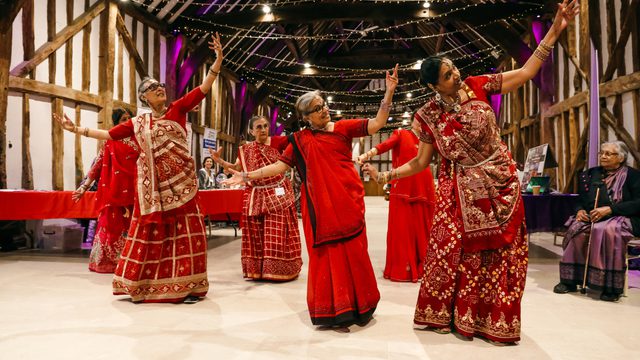
Both the Oshwal and Zoroastrian communities participate in wearing Saris. In another workshop we found out that depending on culture/region/occasion, the way that a sari is worn differs. We also learnt the importance of the embroidery on traditional sari’s. The intricate hand embroidery on saris are often used to tell an important story. This allows for important parts of their heritage and culture to be preserved through beautiful clothing. Unfortunately, these detailed embroidery skills aren't as popular with the younger generations. We were also given the chance to put on a sari, the intricate folds deliberately used to create a specific style.
This event was incredibly insightful and especially highlighted the importance of the Stories of Harrow project. On numerous occasions throughout the evening, we were reminded that keeping cultures alive requires active participation and this night was a beautiful display of it.